
Views: 0 Author: Site Editor Publish Time: 2025-08-25 Origin: Site


Cold chain storage plays a critical role in modern healthcare, ensuring that vaccines, medications, and biological samples remain safe, effective, and stable during storage and transport. Maintaining the correct temperature throughout the supply chain is essential to prevent spoilage, preserve potency, and support global vaccination programs.
In recent years, the debate between portable medical freezers and traditional cold storage solutions has gained attention. While traditional cold storage units are known for their large capacity and stable long-term storage, portable medical freezers offer flexibility, mobility, and rapid deployment in remote or emergency settings.
This article will provide a detailed comparison of portable medical freezers and traditional cold storage, examining their performance, cost, and practical applicability. By the end, readers will have a clearer understanding of which solution is better suited for different healthcare and vaccine storage scenarios.
Traditional cold storage refers to fixed refrigeration units, walk-in cold rooms, and large-scale freezers commonly used in hospitals, laboratories, and central vaccine warehouses. These units are designed to maintain a consistent low temperature over extended periods, making them suitable for storing vaccines, medications, biological samples, and laboratory reagents. While they provide reliable long-term storage, their immobility limits their use in field operations or remote healthcare scenarios, where portable medical freezers often offer a more flexible alternative.
Traditional cold storage units typically operate within a wide temperature range, from standard refrigeration (2°C–8°C) to ultra-low temperatures (-20°C to -80°C). They can accommodate large volumes, supporting thousands of vaccine vials or hundreds of biological samples simultaneously. However, these systems require regular maintenance, including temperature monitoring, defrosting, and professional servicing, to ensure consistent performance. In contrast, portable medical freezers often include built-in monitoring systems and simpler maintenance procedures for mobile or decentralized storage.
Large Capacity: Ideal for hospitals, research labs, and central vaccine depots with high-volume storage needs.
Long-Term Storage: Can safely store vaccines and biological samples for extended periods without frequent intervention.
Stable Performance: Offers highly consistent temperature control, reducing the risk of spoilage and ensuring sample integrity.
Bulky and Immobile: Fixed installation makes transportation and relocation difficult.
High Initial Investment: Installation and setup costs are significantly higher than portable solutions.
Limited Flexibility: Not suitable for emergency response, fieldwork, or remote vaccination campaigns, where portable medical freezers are preferred.
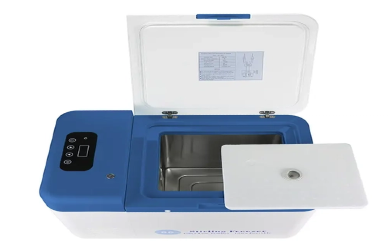
Portable medical freezers are compact, transportable refrigeration units designed to maintain precise low temperatures for vaccines, medications, and biological samples. Unlike traditional cold storage, they are intended for mobile and decentralized use, providing a reliable solution for healthcare providers who need flexibility without sacrificing temperature control.
Portability: Lightweight design allows easy transport between locations.
Precise Temperature Control: Maintains stable temperatures to ensure the integrity of sensitive medical products.
Low Energy Consumption: Optimized for energy efficiency, often with battery backup for field use.
Fieldwork and remote medical missions
Mobile vaccination units and outreach programs
Emergency medical services and disaster response
Lightweight and easy to transport
Energy-efficient and often equipped with battery backup
Ideal for short-term storage and rapid deployment
Limited storage capacity compared to traditional cold storage
Higher per-unit cost, especially for advanced models with smart monitoring features
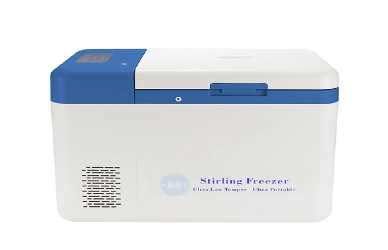
Temperature stability is a critical factor for preserving vaccines and biological samples. Traditional cold storage offers highly consistent temperatures over long periods, minimizing the risk of degradation. Portable medical freezers, while smaller, also provide precise temperature control, often with advanced monitoring systems to ensure stability during transport or temporary storage. Both solutions protect product integrity, but portable freezers are optimized for mobility without compromising accuracy.
One of the main differences lies in mobility. Traditional cold storage units are fixed in place, making them suitable for hospitals or central labs but unsuitable for field operations. In contrast, portable medical freezers are lightweight and easy to transport, ideal for remote clinics, mobile vaccination campaigns, and emergency medical services. Their flexibility allows healthcare providers to deploy cold chain solutions wherever they are needed most.
Traditional cold storage requires significant upfront investment and higher long-term operating costs due to continuous power consumption and maintenance. Portable medical freezers typically consume less energy and may include battery backup options for off-grid scenarios. Additionally, many portable units use eco-friendly refrigerants, reducing environmental impact and operational expenses over time.
Traditional cold storage excels in large-scale, long-term storage, capable of holding thousands of vaccine doses or large volumes of biological samples. Portable medical freezers, on the other hand, are better suited for small-scale, rapid-turnover storage, where mobility and accessibility are more important than sheer volume. Selecting between the two depends on whether the priority is high capacity or operational flexibility.
Traditional cold storage units are best suited for fixed, high-volume applications that require long-term, stable temperature control. They are commonly used in:
Main hospital laboratories: For storing large quantities of medications, vaccines, and biological samples, ensuring they remain safe and effective over extended periods.
Central vaccine warehouses: Serving as primary storage hubs for national or regional immunization programs, providing centralized management and easy inventory monitoring.
While these setups provide excellent capacity and reliability, their immobility limits their use in field operations or emergency situations where rapid deployment and transportation are necessary.
Portable medical freezers are designed to offer flexibility, mobility, and dependable temperature control in scenarios where traditional cold storage is impractical. Typical use cases include:
Mobile vaccination units: Ensuring vaccines remain within the required temperature range during outreach campaigns, even when traveling long distances.
Vaccine transport: Safely moving vaccines between clinics, distribution centers, or temporary storage locations, while maintaining the integrity of sensitive medical products.
Remote clinics: Providing reliable cold storage in rural or underdeveloped areas without permanent refrigeration infrastructure.
Emergency response: Supporting disaster relief efforts or field hospitals, allowing healthcare teams to rapidly deploy cold storage solutions on-site.
By selecting the appropriate storage solution based on operational needs, healthcare providers can effectively maintain vaccine potency and improve logistical efficiency. The versatility of portable medical freezers makes them an increasingly essential tool in modern healthcare delivery, especially in remote, mobile, or emergency settings.
In summary, both traditional cold storage and portable medical freezers have clear advantages. Traditional cold storage is ideal for large-scale, long-term storage in hospital labs and central vaccine warehouses but lacks mobility. Portable medical freezers offer flexibility, lightweight design, and energy-efficient performance, making them perfect for mobile vaccination units, vaccine transport, remote clinics, and emergency response, though with smaller capacity and higher per-unit cost.
