
Views: 0 Author: Site Editor Publish Time: 2026-03-23 Origin: Site


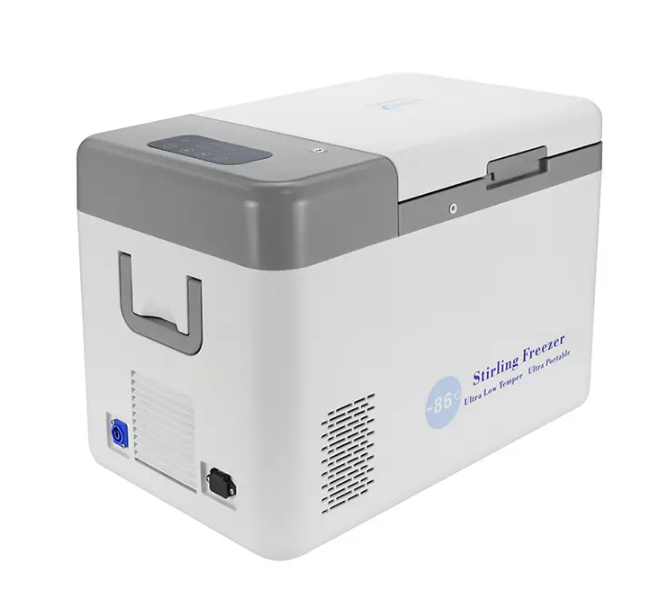
Ultra-low storage should not force labs to choose between strong cooling and lower energy use. Yet many traditional systems still create high power costs and heavy room heat. That is why the Stirling ULT Freezer is getting more attention in modern labs, biobanks, and clinical facilities.
In this article, you will learn how a Stirling ULT Freezer delivers strong cooling performance while using energy more efficiently. You will also see its key advantages, daily lab value, and the main points to review before choosing one.
Energy efficiency is not only about a lower daily power number. It also depends on how the freezer cools, how much heat it throws into the room, and how often the system must work hard again after normal use.
A Stirling ULT Freezer uses a free-piston Stirling engine instead of a traditional cascade compressor system. That difference matters because the engine moves heat through a sealed thermodynamic cycle rather than through repeated compressor stages. The design can reduce wasted motion and support more efficient cooling in daily use. For labs, that means the freezer may hold ultra-low conditions while drawing less power over time. Lower energy use becomes especially important when the unit runs all day, every day, across many years of ownership.
Many traditional ULT freezers cool through on-off cycling. They pull down temperature, stop, and then restart again. A Stirling system works in a more continuous and modulated way. That smoother cooling pattern can reduce sharp energy spikes and help the freezer maintain steady conditions without repeated heavy restarts. It also supports a more controlled operating rhythm during daily use. For facilities running several freezers at once, this difference can improve total energy performance and reduce the stress often linked to aggressive compressor cycling.
A freezer does not only consume electricity. It also releases heat into the room, and the building HVAC system must remove that heat. This hidden cost is often overlooked during equipment purchase. A Stirling ULT Freezer is often chosen because it can reject less heat than many traditional ULT designs. That can lower the air-conditioning burden in freezer rooms and make dense storage areas easier to manage. Over time, lower room heat may improve both comfort and total facility efficiency, especially in labs where many cold units operate together.
Not every sample must be stored at the coldest possible point. Some materials can be held safely at warmer ULT setpoints based on lab policy and sample requirements. A Stirling system often supports a broad and stable operating range, which gives labs more flexibility. If a project allows storage at a warmer setpoint, the freezer may use less energy while still protecting the material. This makes the Stirling ULT Freezer attractive for facilities that want to match cooling performance closely to real sample needs instead of using one fixed strategy for everything.
A freezer purchase should be judged over years, not only at the time of ordering. Power use, room heat, maintenance needs, and service interruptions all shape total cost. A Stirling unit may not always be the lowest-priced option at the start, but it can return value through lower daily energy demand and reduced operating burden. For B2B buyers, this matters because one freezer may run for many years without pause. The real question is not only what it costs to buy. It is what it costs to own.
Energy Factor | Stirling ULT Freezer Advantage | Why It Matters |
Cooling method | Free-piston Stirling engine | Supports efficient heat transfer |
Cooling pattern | Continuous modulated operation | Reduces waste from hard cycling |
Heat rejection | Often lower | Reduces HVAC burden |
Setpoint flexibility | Broad usable range | Supports smarter energy use |
Ownership view | Lower operating burden | Improves long-term value |
Tip: Ask suppliers for daily energy data and room heat output data, not only cabinet size and setpoint range.
Low power use means little if sample protection becomes weaker. That is why cooling performance still sits at the center of every buying decision.
Sensitive samples do not only need deep cold. They also need stable cold. A Stirling ULT Freezer is often valued because its cooling method supports tight control during normal operation. Steady storage conditions matter for enzymes, tissues, biologics, reference materials, and long-term research samples. Large swings can add risk even when the average temperature looks acceptable. In practice, stable control helps labs trust the freezer during routine access, long storage periods, and normal room condition changes. That reliability is one of the main reasons buyers consider Stirling technology.
Door openings happen in every active lab. The important question is how quickly the freezer returns to its target after the door closes. Recovery time matters because repeated slow recovery can expose samples to stress across the day. A Stirling system often performs well here because continuous modulated cooling helps it respond smoothly after access events. That does not remove the need for good user habits, but it does support better daily performance. For busy labs, fast recovery can protect samples and reduce the penalty of normal workflow interruptions.
A freezer is not useful if one corner is much warmer than another. Uniformity across shelves, racks, and compartments matters because sample quality should not depend on exact placement inside the cabinet. A Stirling ULT Freezer is often chosen for strong chamber consistency, especially in workflows where many users share one unit. Better uniformity can simplify storage planning and reduce concern about hot spots. It also supports cleaner SOPs because staff can store materials according to inventory logic rather than trying to avoid uneven internal temperature zones.
Power loss is one of the most stressful events in cold storage. When it happens, warm-up speed becomes critical. A freezer that holds protective temperatures longer gives the team more time to respond, move samples, and stabilize the situation. Stirling ULT systems are often valued for strong warm-up protection because efficient design and insulation can slow temperature rise after outage events. This matters for biobanks, research programs, and clinical facilities where sample loss can be costly or impossible to reverse. Extra response time is a real operational advantage.
Note: Cooling performance should be judged through stability, recovery, uniformity, and warm-up behavior together, not through one temperature number alone.
Daily lab value often comes from small details. These details affect layout, workflow, maintenance effort, and how comfortable the freezer room feels during normal operation.
Freezer rooms are expensive to build and difficult to expand. That is why storage density matters. A Stirling ULT Freezer often uses internal space efficiently because its cooling layout does not require the same bulky compressor arrangement found in some traditional systems. That can leave more usable room for samples inside a similar footprint. For labs, this may mean more boxes per square meter and fewer additional units over time. Better storage density also supports cleaner room planning, especially in facilities where floor space is already under pressure.
Maintenance takes time, money, and often causes sample handling risk. Stirling systems are often appreciated because they use an oil-free design and fewer moving parts than many compressor-based ULT freezers. That can reduce routine service burden and lower the chance of some common mechanical issues. It does not mean no maintenance is needed. Filters, seals, alarms, and calibration still matter. But the service profile can be easier to manage over the long term. For labs without large technical teams, simpler upkeep is a meaningful practical benefit.
Noise and room heat shape the daily working environment more than many buyers expect. A room full of loud, hot freezers can become uncomfortable and harder to manage. A Stirling ULT Freezer often operates more quietly and rejects less heat than older compressor models. That improves lab comfort and may reduce the load on room cooling systems. Better working conditions can also support placement in spaces where noise and heat matter, such as near active work areas or in smaller support rooms connected to research operations.
One freezer may support different projects across its life. That flexibility matters because research goals change, sample mixes shift, and storage demand rarely stays fixed. Stirling systems are often strong in mixed environments because they combine efficient operation, stable control, and broad setpoint flexibility. This helps labs use the same platform across research storage, clinical material handling, and biobank support. For organizations trying to standardize equipment, a Stirling ULT Freezer can simplify training, planning, and long-term fleet management across multiple departments.
1. It can store more samples in limited floor space.
2. It can reduce service burden in daily operations.
3. It can lower room heat and support quieter labs.
4. It can fit different workflows over time.
Tip: Review usable storage density, not only total cabinet volume, when comparing freezer models.
The best comparison is not based on one feature. Buyers should compare energy, maintenance, cooling behavior, and real facility impact together.
Traditional compressor ULT freezers can still perform well, but they often consume more electricity than efficient Stirling models under similar storage conditions. The gap becomes more important in real laboratory use, where freezers run continuously and room conditions change across the year. A Stirling ULT Freezer often stands out because it can reduce direct energy demand while still maintaining ultra-low storage. For a facility running several units, even moderate daily savings can turn into large yearly savings. That makes energy comparison one of the most practical buying filters.
Cascade compressor systems rely on multiple compressors and refrigerant stages to reach deep temperatures. Stirling technology uses a different thermodynamic engine and a sealed working gas cycle. This creates a different balance of performance and operating behavior. Compressor systems are familiar and widely serviced, while Stirling systems often emphasize efficiency, lower heat rejection, and smoother cooling control. The right choice depends on the application, but buyers should understand that these are not small design variations. They are two different ways of delivering ultra-low storage.
Maintenance affects both operating cost and sample risk. Compressor-based ULT freezers often involve more complex mechanical systems and may require more service attention over time. A Stirling design usually offers a simpler service profile because it has fewer moving parts and no oil-related maintenance burden. This can reduce downtime risk and make ownership easier to plan. For facilities storing irreplaceable samples, reliability is not just a technical issue. It is a business issue. Fewer service events can mean fewer sample transfers and less operational disruption.
A Stirling ULT Freezer often offers better lifetime value when the facility cares about energy savings, lower HVAC burden, reduced maintenance, and long service life. The advantage becomes even stronger when many units operate in one site. In those cases, heat output and service complexity can create major hidden costs. Stirling systems are especially attractive for buyers who evaluate total ownership cost instead of purchase price alone. If the freezer will protect valuable material for years, long-term value usually matters more than the opening quote.
Comparison Point | Stirling ULT Freezer | Traditional Compressor ULT |
Energy profile | Often lower daily use | Often higher daily use |
Heat output | Often lower | Often higher |
Cooling behavior | Continuous modulated cooling | On-off compressor cycling |
Maintenance profile | Simpler, oil-free design | More mechanical service burden |
Lifetime value | Strong for efficiency-focused sites | Strong for buyers favoring established platforms |
Note: The better freezer is the one that fits your facility’s risk, workflow, and ownership priorities, not only the one with the lowest list price.
Choosing well means matching the freezer to the room, the sample load, and the long-term operating plan.
Capacity should fit real inventory needs, not only today’s shelf count. Buyers should review sample box counts, future growth, rack layout, and access frequency before choosing size. A freezer that is too small may be overcrowded quickly. A freezer that is too large may waste floor space and energy. The right Stirling ULT Freezer should support current storage comfortably while leaving room for sensible growth. Storage density matters too. Usable internal space often tells more than total volume on a product sheet.
Performance should be reviewed as a group of related metrics. Setpoint range tells you what temperatures the freezer can hold. Recovery speed shows how quickly it returns after door openings. Uniformity explains how evenly cold is distributed across the chamber. Buyers should compare all three, because one strong number does not guarantee balanced performance. A freezer used for valuable research material should combine suitable range, stable chamber conditions, and practical recovery behavior. That balance is often a better guide than chasing the lowest possible setpoint alone.
A freezer can look ideal on paper and still fit poorly into the room. Buyers should check cabinet dimensions, service clearance, door swing, airflow direction, and room traffic patterns before ordering. A Stirling ULT Freezer can offer practical space advantages because lower heat output and efficient design may support easier placement in dense storage areas. Still, every room is different. Layout planning should happen early so the unit supports safe access, easy maintenance, and smooth airflow without creating avoidable problems later.
The strongest purchase decisions usually come from full ownership analysis. Buyers should review not only energy use, but also room heat load, service expectations, warranty support, and likely operating life. These factors shape the real cost of the freezer after installation. A Stirling system may create meaningful savings through lower electrical demand and reduced facility cooling burden. Over time, those savings can outweigh a higher purchase price. For large labs and biobanks, this ownership lens is often the most useful way to compare options.
Buying Factor | What to Review | Why It Matters |
Capacity | Sample volume and growth | Prevents crowding or waste |
Storage density | Usable internal layout | Improves space efficiency |
Performance | Range, recovery, uniformity | Protects sample quality |
Installation fit | Clearance and room layout | Supports safe operation |
Ownership value | Energy, HVAC, maintenance | Reveals true long-term cost |
Tip: Build your checklist around sample risk, room limits, and ownership cost before you compare product brochures.
A Stirling ULT Freezer gives labs lower energy use, stable cooling, and better long-term operating value. It helps protect sensitive samples while reducing heat load, maintenance pressure, and total ownership cost in daily lab use.
Ningbo Juxin ULT-Low Temperature Technology Co., Ltd. adds value through advanced Stirling technology, precise temperature control, and practical support for research, medical, and industrial storage needs. Its responsive service and flexible solutions help buyers build efficient and reliable ultra-low temperature systems.
A: A Stirling ULT Freezer uses Stirling cooling for efficient ultra-low sample storage.
A: A Stirling ULT Freezer offers lower energy use, stable cooling, and less heat output.
A: Set the right temperature, reduce door openings, and keep airflow clear.
A: A Stirling ULT Freezer can lower long-term costs through energy and maintenance savings.
A: Check door seals, room temperature, loading level, airflow, and alarm records.


