
Views: 0 Author: Site Editor Publish Time: 2026-03-16 Origin: Site


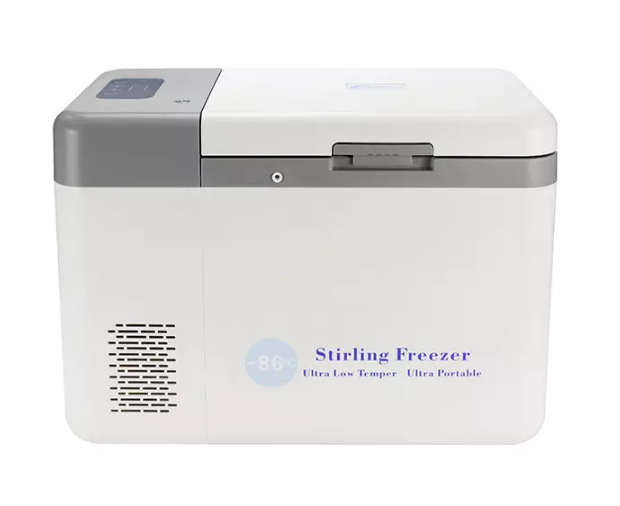
Ultra-low storage is no longer limited to fixed lab equipment. Many teams now need safe cooling during transport, field work, and remote testing. That is why a stirling portable freezer has become an important tool in modern medical, research, and industrial workflows.
In this article, you will learn what a stirling portable freezer is, how it works, and why it matters. You will also see its key benefits, common applications, and the most important factors to consider before choosing one.
A portable ULT freezer is more than a small cold box. It is a specialized system built to protect sensitive materials when mobility, temperature control, and reliability all matter at the same time.
A stirling portable freezer is a compact ultra-low temperature unit designed for moving or temporary storage of sensitive materials. It is usually used for vaccines, biological samples, trial materials, and other products that must stay cold during transfer or field use. Unlike a standard lab freezer, it is built for smaller volumes and easier relocation. That makes it useful in remote clinics, mobile labs, and decentralized research programs. Its real value comes from combining deep cooling, controlled storage, and practical portability in one unit.
A Stirling system cools by repeatedly compressing and expanding a sealed gas inside the machine. In many designs, helium serves as the working gas because it moves heat efficiently and supports stable low-temperature performance. This process creates cooling without the large compressor setup found in many traditional systems. A free-piston design also reduces the number of wear-heavy parts. For users, that often means lower vibration, quieter operation, and more predictable recovery after opening the lid or door during normal handling.
Traditional compressor systems depend on refrigerant circulation and larger mechanical assemblies. A Stirling design takes a different route, which can improve efficiency in compact equipment. Because the cooling method is different, a stirling portable freezer often performs well in applications where energy use, mobility, and maintenance access matter. It may also produce less vibration, which is helpful when storing delicate materials. The main difference is not only the parts inside. It is the way the system supports deep cooling in a smaller and more mobile format.
Most portable ULT freezers are expected to work somewhere in the ultra-low range, often between about -50°C and -86°C, depending on the model and use case. What matters most is not only the lowest point on paper. Buyers should also check temperature stability and recovery speed after access. Sensitive materials can be harmed by repeated temperature swings even when the display eventually returns to the target. A strong portable model should combine a suitable range, stable holding performance, and quick recovery during real daily operation.
True portability depends on more than a handle or small body. Weight, outer size, power flexibility, and loading design all shape real-world mobility. A unit may be called portable, yet still be hard to move safely through field sites or between vehicles and lab stations. A practical portable ULT freezer should be manageable for transport, easy to secure during movement, and flexible enough to run in different settings. In real operations, portability means the freezer can move without losing temperature control or adding too much workflow burden.
Feature | Why It Matters | What Buyers Should Check |
Cooling method | Affects efficiency and recovery | Stirling or compressor design |
Temperature range | Must fit sample needs | True operating range |
Stability | Protects sample integrity | Variation under normal use |
Portability | Supports field transport | Weight, size, handles |
Power flexibility | Expands use cases | AC/DC compatibility |
Note: Do not judge a portable ULT freezer by size alone. Stable temperature performance matters more than compact appearance.
The best portable systems do more than keep samples cold. They support smoother logistics, better operating cost control, and safer handling in places where traditional ULT storage is hard to use.
Energy use is a major part of ownership cost, especially when a unit runs often or stays on for long periods during transport and site work. A stirling portable freezer is often chosen because it can deliver strong cooling while using power more efficiently than many older portable designs. Lower energy demand may reduce electricity cost, battery strain, and heat load around the unit. Over time, those savings can improve total value. For B2B buyers, long-term operating cost matters as much as purchase price.
Temperature precision is critical when the cargo includes vaccines, reagents, cell material, or trial specimens. These products do not only need cold storage. They need storage that stays consistent during movement and access. A stirling portable freezer is often valued for stable control and low fluctuation under normal use. That helps teams protect sample integrity during transfers, remote collection, or short-term staging. In quality-driven settings, precise control is not a bonus feature. It is a core requirement for reliable cold-chain work.
Large ULT freezers are built for fixed facilities. Portable Stirling units serve a different role. They help teams bring ultra-low storage closer to patients, collection points, and field operations. Their compact size makes them easier to place in vehicles, mobile labs, satellite clinics, and limited work areas. That improves workflow when samples cannot wait for transport to a central freezer room. It also supports decentralized testing models, where speed and proximity matter. In these cases, compact design creates real operational value.
Portable equipment faces rougher conditions than stationary lab systems. It may be moved often, exposed to changing power sources, or used in locations with tighter service support. That is why durability and maintenance needs matter so much. A stirling portable freezer is often selected because its design can reduce routine maintenance burden compared with more complex portable cooling systems. Buyers should still inspect seals, clean accessible components, and follow service schedules. Reliable performance comes from both good engineering and disciplined daily handling.
Tip: Ask suppliers for both energy-use data and recovery performance data. Those numbers reveal more than a simple product brochure.
Application fit is one of the most important buying factors. The right freezer is the one that solves the real field problem, not just the one with the longest feature list.
Vaccines often require precise storage during transport between central facilities and remote care sites. A stirling portable freezer helps bridge that gap by providing deep cooling in a compact and transport-friendly format. It can support outreach programs, emergency supply movement, and special handling for temperature-sensitive medical products. This is especially useful when standard refrigerators or passive boxes cannot meet the required temperature range. In medical logistics, dependable temperature control during movement can be the difference between safe use and wasted inventory.
Clinical trials often involve collecting and storing samples far from the main lab. Blood, tissue, DNA, and other materials may need immediate low-temperature protection before they can be transferred for analysis. A portable ULT system supports that process by bringing controlled storage closer to the collection point. It helps reduce transfer delays and lowers the risk of sample loss during transport. For research teams, that means stronger chain-of-custody control and more confidence in sample integrity from the moment of collection.
Field science and mobile testing programs need equipment that can move while still protecting valuable materials. A stirling portable freezer fits well in these settings because it combines mobility and deep cooling in one small platform. It can support environmental research, disease monitoring, pilot programs, and other operations where sample storage must happen outside a fixed lab. It also works well as a local support unit inside larger facilities. In both cases, it reduces dependence on a single central freezer and improves handling speed.
Portable ULT freezers are not limited to life science work. They can also protect specialty foods, enzymes, chemicals, and industrial materials that must remain cold during short-term storage or transport. In seafood and food processing, deep freezing can help preserve texture and quality. In industrial testing, portable low-temperature systems can support thermal studies and material conditioning. The value is similar across sectors: controlled low temperature, small footprint, and easier movement between locations where larger fixed systems are not practical.
● Medical teams use them for vaccine and biologic transport.
● Research groups use them for remote sample collection.
● Field programs use them in mobile testing environments.
● Industrial users use them for sensitive material preservation.
Note: The best application is one where mobility and sample protection must work together, not where only large storage volume matters.
Choosing the right model starts by defining the workflow. Buyers should understand what they store, where they move it, how long it stays inside, and what failure risks are most serious.
Temperature range should match the real storage requirement, not a general assumption. Some materials need true ultra-low storage at -80°C or -86°C, while others may allow a warmer setpoint. Stability matters just as much as the target. A freezer that reaches the low number but drifts too much during use may not be the right fit. Buyers should compare claimed range, temperature variation, and recovery behavior. That approach gives a more honest picture of whether the unit can protect the intended materials.
Capacity and portability often pull in opposite directions. A larger freezer can store more, but it may be heavier, harder to move, and less practical for remote work. A smaller unit may travel easily, but it may not support longer trips or bigger sample loads. Buyers should estimate real sample volume, packaging size, and transport frequency before choosing. The right stirling portable freezer should balance storage space and mobility so the team can move it safely without sacrificing workflow efficiency.
Power flexibility is a major advantage in portable cold storage. Many users need a freezer that works both in the lab and in vehicles or field locations. AC/DC compatibility can make that transition much easier. Buyers should verify accepted voltage ranges, switching behavior, and backup options before purchase. It is also wise to confirm how the freezer performs when power conditions change. A unit may look portable, but without strong power flexibility it may fail to support real transport workflows or emergency cold-chain needs.
Monitoring functions are critical because portable workflows carry more risk than fixed indoor storage. During transport, site transfer, or off-hour use, teams need clear information about what is happening inside the unit. Good portable systems offer temperature display, alarm functions, and data logging that supports traceability. Remote alerts or visible power-loss warnings are also valuable. For B2B buyers, these features support compliance and reduce risk. A freezer should not only hold temperature. It should also help the team prove it held temperature.
Selection Factor | What to Review | Why It Matters |
Temperature range | Lowest usable setpoint | Matches product needs |
Stability and recovery | Normal-use performance | Protects sample quality |
Capacity and weight | Real transport balance | Supports safer handling |
Power options | AC/DC and backup plan | Improves continuity |
Monitoring | Alarms and logging | Reduces operational risk |
Tip: Build your selection checklist from the route, cargo, and access pattern first. Then compare freezer specs against that workflow.
Not every portable ULT unit delivers the same value. Buyers should compare cooling technology, total cost, mobility, and sample risk before choosing a model.
A stirling portable freezer often offers better energy efficiency, stable control, and lower maintenance in compact formats. Compressor-based units can also cool well, but they may bring more noise, weight, and service demand. The better option depends on the route, power conditions, and cargo value. For mobile workflows and sensitive materials, Stirling systems often provide stronger long-term value.
Budget units may look attractive at first, but premium models can justify the price through better stability, stronger alarms, and longer service life. Buyers should compare total cost, not only the purchase price. A cheaper unit that uses more power or creates more risk may cost more later.
Portability and capacity often compete. A lighter unit is easier to move, while a larger unit stores more cargo. The right choice depends on the job. For short routes and small high-value loads, portability often matters more. For batch transport, extra capacity may be worth the added weight.
A stirling portable freezer may cost more up front, but it can reduce energy use, service needs, and sample loss over time. For vaccines, trial samples, and expensive biologics, the higher initial cost may protect much greater value in daily use.
Option Type | Main Advantage | Main Trade-Off |
Stirling portable freezer | Efficiency and stability | Higher initial price |
Compressor portable freezer | Wider market options | Often higher maintenance |
Budget portable model | Lower purchase cost | Weaker long-term value |
Premium portable model | Better protection features | Higher capital spend |
Even the best unit will underperform if daily handling is weak. Good results depend on preparation, organization, power planning, and routine inspection.
Let the freezer reach the target temperature before loading. Check the display, alarms, and power source first. If the unit will travel, confirm the route and backup power plan in advance. A stirling portable freezer protects samples best when preparation is treated as part of the cold-chain process.
Portable units have limited space, so layout matters. Use clear labels and arrange items for fast access. Avoid overfilling, because dense packing can reduce airflow and slow retrieval. Good organization protects both efficiency and temperature stability.
Power planning is critical in mobile use. Teams should know when the freezer runs on AC, when it switches to DC, and how long backup support can last. They should also check cables and connectors before transport. Strong power procedures reduce avoidable temperature risk.
Portable systems face movement, vibration, and changing environments. Staff should inspect seals, hinges, surfaces, and cooling areas on a routine schedule. Frost should be removed early, and temperature records should be checked for drift or slow recovery.
Note: Portable ULT failures often come from small handling mistakes. Strong SOPs help prevent them every day.
A stirling portable freezer gives teams mobile ultra-low storage, stable temperature control, and stronger protection for sensitive samples during transport and field use. It helps labs, clinics, and research programs work more safely and efficiently when fixed storage is not practical.
Ningbo Juxin ULT-Low Temperature Technology Co., Ltd. adds value through advanced Stirling cooling, energy-saving performance, dual-power flexibility, and responsive technical support. Its portable freezer solutions help users improve cold-chain reliability and handle demanding storage tasks with more confidence.
A: A stirling portable freezer is a compact unit for ultra-low storage during transport or field use.
A: Pre-cool the stirling portable freezer, organize samples, and confirm stable power before moving it.
A: A stirling portable freezer often offers better efficiency, stable control, and lower maintenance.
A: Price depends on temperature range, capacity, power options, alarms, and monitoring features.
A: Check door openings, sample load, power supply, airflow, seals, and frost buildup.


