
Views: 0 Author: Site Editor Publish Time: 2026-03-12 Origin: Site


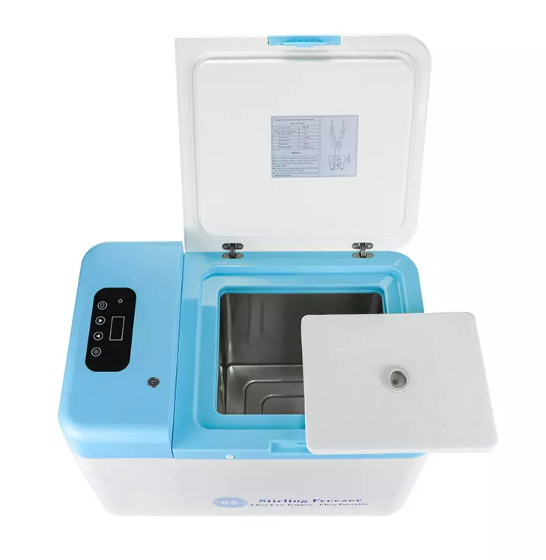
Not every lab needs a large freezer, but many still need true ultra-low temperature storage. That is why a Benchtop Stirling Freezer has become a practical choice for labs that want compact size, stable cooling, and better use of limited space.
In this article, you will learn what a Benchtop Stirling Freezer is, how it works, and where it fits best. You will also see its main benefits, common applications, and the key factors to consider before choosing one.
A benchtop unit is not simply a smaller freezer. It is a targeted storage solution for labs that need compact size, low temperature, and strong control in a limited space. Its value comes from how it combines lab-friendly dimensions with advanced cooling performance.
A Benchtop Stirling Freezer is a compact ultra-low temperature freezer designed for small-volume storage near the point of use. It usually sits on a bench, under a counter, or in a small lab room where full-size systems are not practical. Instead of using a large traditional compressor layout, it often relies on free-piston Stirling cooling. That design helps it reach deep temperatures while keeping the system compact. For users, it means smaller footprint, controlled storage, and easier placement in modern labs.
Free-piston Stirling technology works by moving a sealed gas through repeated compression and expansion cycles. This process creates cooling without the same system layout used by standard cascade compressor freezers. The result is often lower vibration, improved energy performance, and fewer bulky components. Traditional compressor units still dominate many large storage rooms, but Stirling systems stand out when space, power use, and quiet operation matter more. For small labs, that difference can shape both daily workflow and long-term operating cost.
Modern labs often need small, dedicated storage close to where work happens. A central freezer room may still exist, but it is not always efficient for every sample. Teams running PCR, cell prep, or short-cycle testing may need immediate access to limited materials. A benchtop unit supports that model well. It reduces travel time, simplifies handling, and helps separate projects by team or sample type. In busy labs, better access can reduce door-open time in larger freezers and improve overall sample management.
Most benchtop ULT systems are built for smaller capacities than upright models, but they still support serious cold storage needs. Common ranges include around -40°C, -86°C, and in some special designs even lower. Capacity varies by model, yet the focus stays on compact, high-value storage rather than bulk inventory. Buyers should expect a smaller footprint, lower weight, and easier installation than full-size ULT equipment. That makes these units useful in labs where every square meter affects workflow, safety, and equipment planning.
The Benchtop Stirling Freezer fits many users who store small batches of sensitive material. Research labs use it for reagents, DNA, RNA, tissue samples, and pilot-study materials. Hospitals and clinics may use it for short-term storage during testing or trial work. Pharmaceutical teams may place it near development benches or controlled transport points. Industrial labs can also use it for thermal testing support. Across these sectors, the common need is the same: reliable ultra-low storage in a compact, flexible package.
Feature | Benchtop Stirling Freezer | Traditional ULT Freezer |
Footprint | Compact | Large |
Cooling method | Free-piston Stirling | Compressor cascade |
Best use | Small critical storage | Bulk storage |
Placement | Bench or tight lab area | Dedicated floor space |
Power demand | Often lower | Often higher |
Note: A benchtop unit works best when the storage volume is limited but the sample value is high.
The biggest benefit is not only size. It is the way compact design, efficiency, and easy access work together. For many labs, that mix improves sample protection and daily workflow at the same time.
Lab space is costly and often limited. Large upright freezers can take over a room and create access problems. A Benchtop Stirling Freezer offers real ultra-low storage in a much smaller footprint. It can sit closer to the work area and support faster daily handling. This is especially useful for startup labs, hospital departments, and research teams that need local storage without sacrificing valuable floor space.
Energy use is a major part of freezer ownership cost. A smaller unit already uses less space and may lower demand, while Stirling technology can improve efficiency further in the right setting. Lower power use may reduce utility bills and room heat load over time. For B2B buyers, this matters because true equipment value should be measured across years of operation, not only at the time of purchase.
Some compact Stirling systems support wider voltage input or flexible power options. This can help labs that move equipment between rooms or work across decentralized sites. It can also make backup planning easier than it is for larger floor units. Flexible power does not make every freezer portable, but it does widen the range of practical applications in research, clinical testing, and site-to-site workflows.
Recovery time matters as much as low temperature. A strong benchtop system should return to its setpoint quickly after the door closes. That helps protect sensitive samples during routine use. Stable performance also reduces the risk linked to repeated temperature swings. For labs storing costly reagents or irreplaceable materials, that reliability is a practical advantage, not just a technical selling point.
Tip: When comparing models, ask for real operating data, not only the lowest possible temperature on paper.
Not every lab needs a benchtop ultra-low freezer. Still, in the right setting, it can solve problems that larger systems handle less efficiently. The best choice depends on sample volume, access needs, and site layout.
Many research groups do not need a huge freezer beside every bench. What they need is a reliable place for a limited number of high-priority materials. A Benchtop Stirling Freezer works well for this purpose. It can hold working stocks, pilot-study samples, reference controls, or special project materials. That reduces traffic to shared bulk storage and gives the team faster access during active experiments. It also helps separate valuable or time-sensitive samples from the larger lab inventory.
Clinical programs often require clear sample separation, traceability, and fast retrieval. A small ultra-low freezer can support that structure well. It may be placed near a clinical processing area so staff can store patient-linked materials quickly after collection or preparation. This shortens transfer time and can simplify handling steps. In personalized medicine or trial work, sample identity matters as much as temperature control. A benchtop system supports both by making inventory easier to organize and easier to access when the storage volume is modest.
Some pharmaceutical workflows need controlled storage at transfer points rather than only in one main storage room. A benchtop unit can support this need during packaging, preparation, staging, or temporary holding. It is not a replacement for every transport solution, but it can help bridge cold-chain steps in a controlled environment. In product development, it may also support small-batch formulation work or stability studies. Its compact size makes placement easier near critical process areas where large freezer systems would be too disruptive.
Healthcare and research work now happens in more places than traditional central labs. Remote testing sites, field-linked programs, and smaller hospital labs may all need serious cold storage without the space for a full freezer room. In these settings, a benchtop or compact Stirling system offers a practical balance. It brings ultra-low capability closer to the workflow and may simplify installation and support. That is especially useful when the sample volume is limited but the need for stable storage remains very high.
● Research teams use it for active project storage.
● Clinical sites use it for organized short-cycle access.
● Pharma groups use it near preparation workflows.
● Remote facilities use it where space is tight.
Note: The best application is one where fast access and compact placement matter as much as low temperature.
Choosing the right unit starts with the workflow, not the catalog. Buyers should define sample type, storage volume, access frequency, site conditions, and monitoring needs before comparing models.
Capacity should fit real daily use. A freezer that is too small may be overfilled and harder to manage. A unit that is too large may waste space and power. Review how many boxes, vials, or sample sets need local storage, then match that number to the available interior layout. A Benchtop Stirling Freezer should support smooth retrieval without crowding or unused volume.
Not every sample needs the coldest setting. Buyers should check storage requirements and lab SOPs first, then compare them to the freezer’s true operating range. A unit reaching -86°C may work well for many biological materials, while some special applications may need lower temperatures. The best option is the one that meets the storage goal without adding unnecessary cost.
Power planning is a key part of freezer selection. Check site voltage, outlet type, and backup availability before purchase. Some Stirling units support broader voltage input, which helps multi-site use and export projects. It is also important to confirm whether the freezer can connect to emergency power or a tested backup plan.
Monitoring features protect both samples and compliance. A good unit should provide clear temperature display, alarm functions, and dependable data logging. Remote alerts can also help staff respond faster during nights or weekends. Buyers should look beyond a feature list and understand how the system works in daily use.
Buying Factor | What to Check | Why It Matters |
Capacity | Real sample volume | Prevents overfill or waste |
Temperature range | Sample requirement | Matches storage need |
Power | Voltage and backup plan | Supports reliability |
Monitoring | Alarm and logging functions | Protects inventory |
Footprint | Bench and room fit | Improves installation |
Tip: Build your buying checklist from the workflow first, then compare freezer specs against that list.
Comparison helps buyers avoid the wrong fit. A smaller freezer can be the better choice, but only when its advantages align closely with real storage needs.
Upright ULT freezers are built for high capacity and long-term bulk storage. They are ideal for central lab inventory, biobanks, and facilities handling large sample loads. A Benchtop Stirling Freezer serves a different purpose. It supports local storage, quick access, and limited-volume control. Upright systems win on capacity, but benchtop systems often win on flexibility, footprint, and point-of-use value. Choosing between them depends on whether the main goal is storage volume or workflow convenience.
Portable ULT freezers focus more on transport, mobility, or field movement. They may support vehicle power, carry-friendly design, or temporary sample travel. Benchtop systems, by contrast, are usually meant for fixed placement inside a controlled indoor environment. They can still be compact, but they are optimized for bench-area storage rather than routine transport. Buyers should choose portable units when movement is central to the workflow. They should choose benchtop units when stable local storage is the main need.
Undercounter freezers and benchtop models both target small spaces, but they are not identical. Undercounter units are designed to fit beneath work surfaces, while benchtop models sit above them. The storage logic may be similar, yet installation and access differ. Benchtop placement can improve visibility and retrieval speed. Undercounter placement may protect open bench space better. The better option depends on room layout, door access, and how often users need to retrieve materials during active bench work.
A larger unit does not always create better value. In many labs, a smaller freezer improves efficiency because it stores only the samples needed near the work area. That reduces travel, shortens handling time, and helps large central units stay organized. The value becomes stronger when the sample volume is limited and the cost of delay is high. In such cases, a benchtop freezer supports productivity as much as storage. It becomes part of the workflow, not only a backup container.
Freezer Type | Main Strength | Best Fit |
Benchtop Stirling Freezer | Compact local ULT storage | Small high-value sample sets |
Upright ULT freezer | Large capacity | Central bulk storage |
Portable ULT freezer | Mobility | Transport and field use |
Undercounter ULT freezer | Hidden small-footprint storage | Fixed low-space labs |
Good technology still depends on good operation. A benchtop freezer performs best when users manage space, airflow, sample layout, and maintenance in a disciplined way.
Even a small freezer needs airflow space around it. Do not push it into a tight corner or block its heat-release path. Check the manual for minimum clearance and follow it closely. The bench or support surface should also be level and strong enough for the loaded unit. Placement should allow the door to open fully and users to work safely. Good location planning improves thermal performance and reduces stress on the cooling system during daily operation.
The smaller the freezer, the more important organization becomes. Build a shelf map before loading samples. Use clear labels, standard box sizes, and a simple digital inventory. That way, staff know exactly where to go before the door opens. Fast retrieval protects the internal temperature and reduces frost buildup over time. It also lowers the chance of mix-ups. In shared environments, organized storage is one of the easiest ways to protect both efficiency and sample quality.
Do not rely only on the front display. Set alarms early and review logged temperature trends regularly. Small changes in recovery speed, door seal condition, or room heat can signal a developing issue. Routine checks help teams catch those signs before a failure occurs. In labs storing valuable materials, remote monitoring adds another layer of protection. It helps staff respond quickly outside working hours. Monitoring is not optional when the cost of sample loss is high.
Routine maintenance keeps performance stable. Remove frost before it becomes heavy. Inspect gaskets, vents, and external surfaces on a fixed schedule. Calibrate temperature verification tools according to your SOP or quality program. If the freezer stores highly sensitive material, consider preventive service support as part of the operating plan. Small units are easier to overlook, but they still need professional care. Consistent maintenance protects accuracy, improves longevity, and reduces the chance of sudden downtime.
Tip: A strong operating SOP can add as much value as a strong freezer specification.
A Benchtop Stirling Freezer gives labs compact ultra-low storage, steady temperature control, and better use of limited space. It is a smart choice for research, clinical work, and other applications that need reliable sample protection without a large freezer footprint.
Ningbo Juxin ULT-Low Temperature Technology Co., Ltd. adds value through advanced Stirling technology, energy-saving performance, and practical product options for different storage needs. Its responsive technical support and custom service also help buyers build a more efficient ultra-low temperature workflow.
A: A Benchtop Stirling Freezer is a compact ultra-low unit for small, critical sample storage.
A: A Benchtop Stirling Freezer uses Stirling cooling for stable, efficient ultra-low storage.
A: A Benchtop Stirling Freezer saves space, lowers energy use, and protects valuable samples.
A: It offers smaller capacity but better point-of-use convenience in tight lab spaces.
A: Check capacity, temperature range, power options, alarms, and workflow fit.


