
Views: 0 Author: Site Editor Publish Time: 2026-03-19 Origin: Site


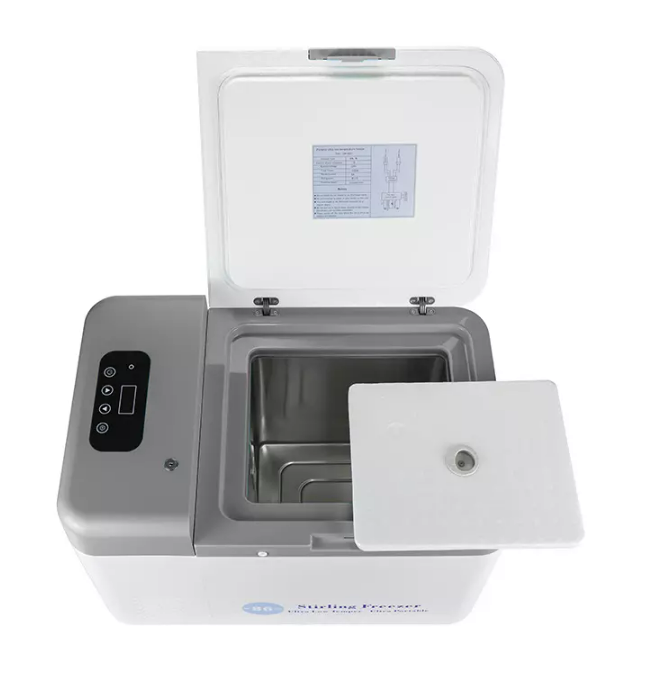
Ultra-low storage is under pressure to do more with less. Labs want reliable sample protection, but they also want lower energy use and less maintenance. That is why the Stirling Ultra Low Temp Freezer is gaining attention in modern research and clinical settings.
In this article, you will learn what a Stirling Ultra Low Temp Freezer is, how its cooling technology works, and why it differs from traditional systems. You will also see its key benefits, common applications, and what to consider before choosing one.
A Stirling Ultra Low Temp Freezer is an ultra-low storage unit that uses a free-piston Stirling engine instead of cascade compressors. Its main job is still the same as any ULT freezer. It protects valuable materials at very low temperatures for long periods. What makes it different is the cooling method inside. That change affects energy use, maintenance needs, temperature stability, and the way the freezer fits into a modern lab.
Traditional ULT freezers usually depend on multiple compressors and refrigerant loops to reach deep cold storage temperatures. A Stirling-based design uses a very different thermodynamic process. It does not rely on the same compressor cycling behavior. Because of that, it can reduce heat output and simplify the cooling system layout. It may also offer a wider usable setpoint range in some models. For buyers, that means the freezer can support more flexible storage strategies and lower long-term operating burden.
Labs are under pressure to cut energy use, reduce downtime, and make better use of limited space. Standard ULT systems can do the storage job well, but they also create major heat and power demand. That raises facility cost over time. Many organizations now want a solution that supports both sample protection and sustainability goals. A Stirling Ultra Low Temp Freezer responds to that shift by offering a different balance of efficiency, reliability, and environmental performance for high-demand storage environments.
Most ULT freezers are used for materials such as vaccines, cell samples, bacteria, enzymes, tissues, and research reagents. A Stirling unit is designed for the same kinds of critical storage tasks. In many cases, it supports stable setpoints from around -20°C to -86°C, depending on the model. That wide range is useful because not every sample needs the same storage temperature. It can also help labs repurpose the unit later when a project changes and storage needs shift.
Feature | Stirling ULT Design | Traditional Compressor ULT |
Cooling method | Free-piston Stirling engine | Cascade compressor system |
Typical benefit | Efficiency and flexibility | Familiar large-scale use |
Heat output | Often lower | Often higher |
Maintenance profile | Simpler, less oil-related service | More compressor-related upkeep |
Setpoint flexibility | Often wider usable range | Often narrower |
Note: A Stirling freezer is not only a new model style. It is a different cooling platform built for modern lab priorities.
The free-piston Stirling engine works by compressing and expanding gas in a closed system to create cooling. Inside the engine, a piston and displacer move in a controlled cycle. This process shifts heat away from the storage chamber and supports very low temperatures. Unlike a standard compressor setup, it uses a smaller number of key moving parts. That simpler motion pattern helps explain why Stirling technology is often linked to lower wear, quiet operation, and strong long-term reliability.
Helium is often used as the working gas because it moves heat efficiently and performs well in this closed-cycle design. The gas is compressed, expanded, heated, and cooled as the engine runs. That repeated motion supports the freezer’s thermodynamic cooling process. Helium does not act like the refrigerant loop in a standard cascade compressor system. Instead, it helps the Stirling engine maintain consistent cooling inside a compact system. This is one reason a Stirling Ultra Low Temp Freezer can stay efficient while using a different internal structure.
Mechanical systems often fail where there is friction, oil dependence, or repeated heavy cycling. A Stirling engine avoids some of those stress points by using fewer moving parts and an oil-free design. That can lower service demand over time and reduce the chance of certain mechanical failures. It also simplifies the maintenance profile compared with some traditional ULT systems. For labs storing irreplaceable materials, reliability is never a small detail. It directly affects sample security, downtime risk, and total ownership cost.
Traditional ULT freezers often work through on-off compressor cycling. They switch on, pull down temperature, then repeat that pattern again and again. Stirling cooling follows a different path. It uses continuous modulated cooling instead of repeated compressor starts and stops. This can improve efficiency and reduce the temperature swings tied to hard cycling behavior. For users, that means a more controlled cooling rhythm. In practice, it can help the freezer maintain stable storage conditions more smoothly during routine daily operation.
Sample protection depends on more than the coldest possible number on the display. It also depends on how evenly the freezer holds temperature and how quickly it recovers after a door opening. Stirling technology is often chosen because it supports strong uniformity and steady-state control. Recovery speed matters too, especially in busy labs where access happens often. When temperature rebounds quickly and consistently, sensitive materials face less stress. That makes the Stirling Ultra Low Temp Freezer especially attractive for high-value research and clinical storage.
Tip: When comparing cooling technologies, ask for data on uniformity, recovery, and daily energy use, not only the lowest setpoint.
Energy is one of the biggest lifetime costs in ultra-low storage. A Stirling Ultra Low Temp Freezer is often selected because it can use far less power than many traditional cascade systems. Lower power demand can cut direct utility bills and reduce the burden on electrical infrastructure. Over several years, those savings can be significant. This matters even more in large lab networks, where multiple ULT units run all day. In those settings, energy efficiency becomes a serious budget issue, not just a technical feature.
Every ULT freezer releases heat as part of the cooling process. When many freezers run in one room, that heat can raise HVAC demand and increase building costs. Stirling-based systems are often valued because they generate less waste heat than many compressor units. That makes the surrounding lab easier to manage. It can also help teams install more cold storage in the same space without overloading room conditions. Lower heat output supports both sustainability targets and more practical facility planning.
Environmental performance matters more now than it did a decade ago. Buyers often review not only power use, but also refrigerant type, insulation materials, and manufacturing impact. Stirling systems are often associated with natural refrigerants and reduced climate impact. That makes them easier to align with sustainability programs and internal environmental goals. For universities, hospitals, and corporate labs, this can support both compliance and public responsibility targets. A better environmental profile also strengthens the long-term value story of the equipment.
Maintenance can interrupt science, delay projects, and expose samples to transfer risk. That is why many teams look closely at service needs before choosing a ULT freezer. A Stirling engine has no oil and fewer moving parts, which helps reduce routine maintenance demands. Its simpler design can also support a long service life when the freezer is used correctly. Over time, that combination can lower service cost and reduce unplanned downtime. For critical storage programs, fewer interruptions often matter as much as lower energy use.
Benefit Area | Why It Matters | Long-Term Value |
Energy efficiency | Cuts daily power demand | Lowers operating cost |
Lower heat output | Reduces room heat burden | Eases HVAC pressure |
Environmental profile | Supports sustainability goals | Improves responsible procurement |
Low maintenance | Reduces service events | Protects uptime |
Long service life | Supports stable ownership | Improves return on investment |
Note: Buyers should evaluate both purchase price and operating burden. The cheaper freezer is not always the lower-cost freezer over time.
A Stirling system can work in many settings, but it creates the most value where energy, uptime, and space matter together.
Research labs often store materials that are hard to replace and expensive to regenerate. DNA libraries, enzymes, tissue samples, bacterial cultures, and reference controls all need dependable storage. In these settings, temperature stability and reliability are essential. A Stirling Ultra Low Temp Freezer fits well because it combines steady performance and lower maintenance demand. It also helps labs manage long operating hours more efficiently. When a freezer protects years of work, small improvements in stability and uptime become very important.
Clinical labs and biobanks need more than cold storage. They need consistency, traceability, and low risk. Samples may support diagnosis, therapy development, long-term studies, or regulated workflows. In these settings, downtime can create major operational disruption. A Stirling-based system offers value because it supports secure storage and can reduce heat and maintenance burden inside dense storage environments. That becomes especially helpful in facilities running many units at once. Better efficiency can also support large-scale storage planning and budget control.
Many institutions now track carbon impact, power use, and building efficiency more closely than before. ULT freezers often become an early target for sustainability improvements because they consume so much energy. A Stirling solution directly addresses that issue. It can cut energy use, lower heat output, and support a smaller operating carbon footprint. For facilities with published environmental goals, this matters at both the technical and management level. Choosing a Stirling Ultra Low Temp Freezer can support science operations and climate strategy at the same time.
Some labs operate across countries, while others support remote sites or changing facility conditions. In those cases, power flexibility can save time and simplify deployment. Certain Stirling models can support a wide voltage range, which helps them operate in different regions without major electrical changes. That makes them easier to install across distributed operations. It also adds flexibility for organizations standardizing equipment globally. When the same freezer platform can work across locations, procurement, training, and service planning all become easier.
1. It suits labs storing high-value materials.
2. It helps dense clinical storage environments.
3. It supports sustainability-focused facilities.
4. It fits operations needing flexible power options.
Tip: If your lab tracks both carbon impact and uptime, compare energy use, heat load, and service history together.
Traditional compressor ULT freezers may cost less in some purchasing situations, but ownership cost goes far beyond the invoice. Energy use runs every day, year after year. Service events, heat output, and downtime risk also add cost. A Stirling Ultra Low Temp Freezer often performs well in total cost comparisons because it reduces several of those long-term burdens. For B2B buyers, that matters more than a narrow focus on initial price. Real value comes from what the unit costs to own, operate, and support over time.
Compressor-based systems often focus on the common deep-freeze range and may offer less flexibility at warmer ultra-low setpoints. Stirling designs can stand out here because some support stable setpoints across a wider span, such as -20°C through -86°C. That matters because many materials do not require the same storage temperature. A wider range allows one freezer to support more types of work. It may also let teams reuse the unit after a project changes, rather than buying another freezer for a new temperature need.
Maintenance is one of the clearest areas where the two technologies differ. Compressor-based systems often involve more complex mechanical assemblies and higher service demands over time. Stirling systems are usually simpler in that respect. With fewer moving parts and no oil, they can reduce certain maintenance tasks and lower wear-related risk. That does not mean they need no care. It means the service profile can be easier to manage. For storage programs handling sensitive material, reduced downtime risk is a major advantage.
Facility planning is not only about cabinet size. It also includes heat rejection, clearance needs, and how many units the room can support. Stirling ULT systems are often praised for lower heat output and efficient internal design. That can improve sample capacity per floor space and reduce strain on room cooling systems. In high-density storage areas, those details matter a lot. A freezer that runs cooler and uses space better may let a lab store more materials without expanding the facility footprint.
Comparison Point | Stirling ULT | Traditional Compressor ULT |
Energy profile | Lower in many models | Often higher |
Setpoint flexibility | Often broader | Often narrower |
Maintenance demand | Often lower | Often higher |
Heat output | Often lower | Often higher |
Long-term ownership view | Strong for efficiency-focused buyers | Strong for buyers favoring familiar systems |
Choosing the right unit starts by matching freezer performance to your real storage workflow. Buyers should review sample volume, temperature needs, monitoring requirements, and long-term operating cost before comparing models.
Capacity should fit actual use, not rough guesses. A freezer that is too small may become crowded fast, while a larger one may waste space and energy. Buyers should review current inventory, expected growth, and retrieval patterns before choosing. The right Stirling Ultra Low Temp Freezer should support daily use smoothly and still leave practical room for expansion.
Low temperature alone is not enough. Buyers should also compare recovery speed and internal uniformity. A freezer should return quickly after door openings and hold stable conditions across the chamber. Balanced performance matters most when samples are sensitive or hard to replace.
Power and monitoring features are part of freezer security. Check voltage compatibility, backup readiness, alarms, data logging, and remote alerts. These tools help protect inventory during off-hours and power events. They also support compliance in regulated environments.
A freezer should be judged over years, not at the time of purchase alone. Buyers should compare energy use, maintenance needs, warranty support, and usable storage value. A model that costs more up front may save more later through lower operating cost and fewer service interruptions.
Note: Build your buying checklist around sample risk, storage workflow, and ownership cost. Then compare freezer models against that list.
A Stirling Ultra Low Temp Freezer gives labs stable cooling, lower energy use, and reduced maintenance compared with many traditional systems. It helps protect valuable samples while supporting more efficient, flexible, and sustainable ultra-low temperature storage.
Ningbo Juxin ULT-Low Temperature Technology Co., Ltd. adds value through advanced Stirling technology, precise temperature control, and practical product solutions for research, medical, and industrial use. Its custom support and responsive service help buyers build reliable long-term storage systems.
A: A Stirling Ultra Low Temp Freezer uses Stirling cooling for stable ultra-low storage.
A: A Stirling Ultra Low Temp Freezer uses helium-based cooling instead of cascade compressors.
A: A Stirling Ultra Low Temp Freezer offers lower energy use, less heat, and lower maintenance.
A: It can be better for labs needing efficiency, flexible setpoints, and lower operating costs.
A: Check capacity, temperature range, recovery speed, alarms, and long-term ownership value.


