
Views: 242 Author: Site Editor Publish Time: 2025-10-23 Origin: Site


Cryogenic applications are at the forefront of technological advancements in a variety of industries, ranging from medical sciences to aerospace. At the heart of these innovations are highly efficient cooling systems that must operate reliably under extreme conditions. Among the leading technologies in this space is the Free Piston Stirling Cooler (FPSC), which is transforming the way we approach cooling for cryogenic systems. Unlike traditional cooling technologies, which rely on mechanical moving parts to compress gas, FPSCs employ a unique design that delivers superior efficiency, compactness, and durability. This article will explore how FPSCs are revolutionizing cryogenic applications, highlighting their key advantages, applications, and future potential.
A Free Piston Stirling Cooler (FPSC) is a type of Stirling engine that uses a free-moving piston to provide cooling, leveraging the Stirling cycle's principle of compression and expansion of gas. Unlike traditional Stirling coolers that use a mechanical drive mechanism to move the piston, FPSCs operate with a unique configuration where the piston floats freely within the cylinder. This eliminates the need for a rigid mechanical connection, offering several advantages, including increased efficiency and reliability.
The operation of an FPSC is based on the Stirling cycle, which consists of four key processes: compression, heating, expansion, and cooling. A heat source heats the gas, which is then compressed by the free piston. The gas expands as it cools, and the cycle repeats. The result is a cooling effect that can reach extremely low temperatures, making FPSCs ideal for cryogenic applications. The key difference with FPSCs is that the piston’s motion is not driven by a conventional crankshaft or mechanical linkage, but instead by pressure differentials within the engine, allowing for smoother, more efficient operation.
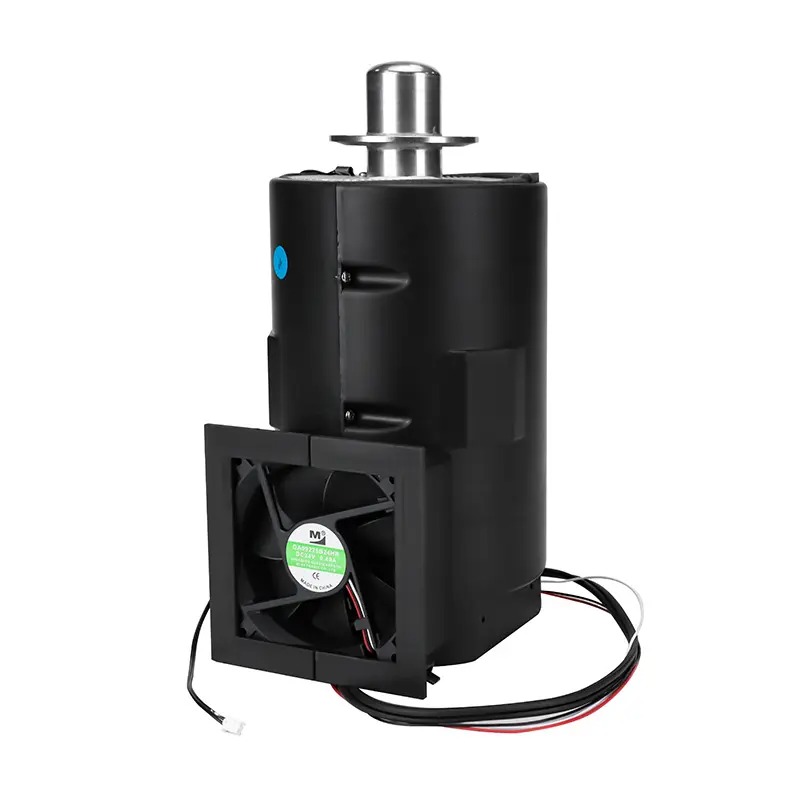
One of the primary advantages of FPSCs is their superior efficiency compared to traditional cooling technologies. The elimination of mechanical frictional losses and the use of high-performance materials enable FPSCs to provide greater thermal efficiency. This allows cryogenic systems to achieve lower temperatures using less energy, making them more sustainable and cost-effective in the long run.
With fewer moving parts, FPSCs have a longer lifespan than traditional cooling systems. The lack of a crankshaft or mechanical linkages reduces wear and tear, which is especially important in cryogenic environments where extreme temperatures can strain conventional machinery. This increased reliability translates into lower maintenance costs and fewer system failures, making FPSCs an attractive choice for industries where uptime is critical, such as in space exploration or medical cryopreservation.
Traditional cryogenic coolers often require bulky components and complex designs that take up significant space and add weight. FPSCs, on the other hand, are much more compact and lightweight. Their simple design allows them to be integrated into a variety of applications without adding excessive bulk. This is particularly beneficial in applications like satellite cooling or portable medical cryogenics, where space and weight limitations are crucial.
Due to the absence of moving mechanical components, FPSCs generate less noise than conventional cryogenic coolers. This makes them ideal for environments where noise reduction is essential, such as in sensitive scientific experiments or medical equipment.
In space exploration, maintaining cryogenic temperatures is vital for the storage and transport of cryogenic fuels, scientific instruments, and other sensitive materials. FPSCs have proven to be highly effective in these environments due to their lightweight and compact design. Their reliability and minimal maintenance requirements make them a preferred choice for space missions, where component failure can result in costly and potentially mission-critical setbacks.
Cryopreservation of biological samples, such as sperm, eggs, and stem cells, requires the use of reliable and efficient cooling systems. FPSCs are increasingly being used in medical and biotechnological fields due to their ability to maintain precise and stable temperatures. The compact size of FPSCs also allows them to be integrated into portable cryogenic storage units, expanding their use in remote locations or field applications.
Quantum computing is an emerging field that requires ultra-cold temperatures to operate. Free Piston Stirling Coolers are being considered as an essential component in the cooling systems of quantum computers, where maintaining low temperatures is crucial for the functioning of quantum bits (qubits). The high efficiency and precision of FPSCs make them well-suited for such demanding applications.
In addition to medical and space-related applications, FPSCs are also being employed in various industrial sectors. For instance, they are used in high-precision manufacturing processes that require controlled cooling, such as in the production of semiconductors. The ability to achieve extremely low temperatures efficiently is valuable in many industrial scenarios.
| Feature | Free Piston Stirling Cooler | Cryocooler (Traditional) | Pulse Tube Cooler |
|---|---|---|---|
| Efficiency | High | Moderate to High | High |
| Noise Level | Low | Moderate | Low |
| Complexity of Design | Simple | Complex | Moderate |
| Reliability | High | Moderate | High |
| Maintenance Requirements | Low | High | Low |
| Size and Weight | Compact and lightweight | Bulky | Moderate |
The table above offers a direct comparison between Free Piston Stirling Coolers, traditional cryocoolers, and pulse tube coolers, highlighting their respective strengths and weaknesses. FPSCs excel in terms of efficiency, reliability, and size, making them particularly suited for applications requiring minimal space and low maintenance.
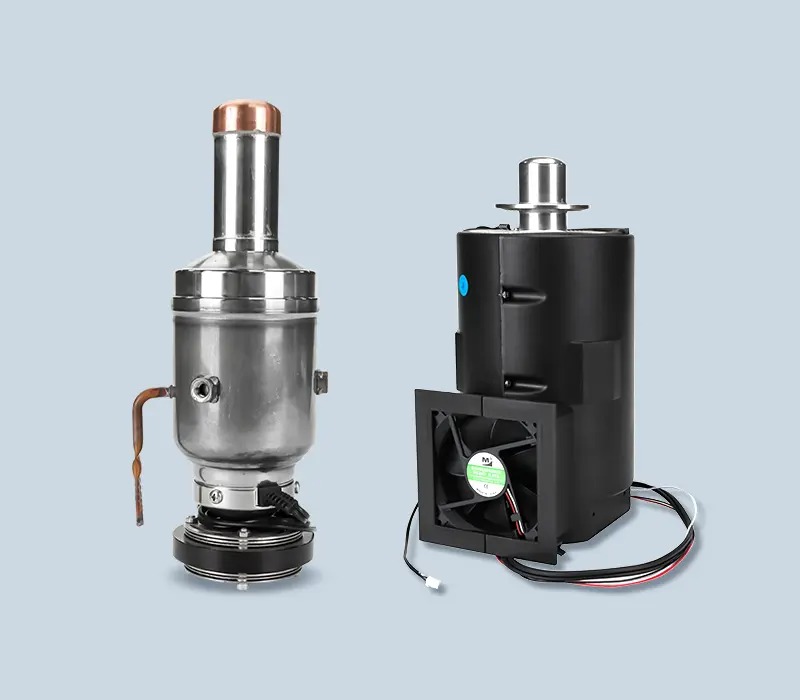
While FPSCs offer many advantages, they are not without their challenges. One of the main limitations is their cost, which can be higher than traditional cooling systems due to the advanced technology and materials involved. Additionally, while FPSCs are highly efficient, their cooling capacities may be limited in some extreme applications where larger cooling powers are needed.
Another challenge is the integration of FPSCs into existing cryogenic systems. Although their compact and efficient nature is a significant advantage, designing systems that fully leverage the FPSC’s capabilities often requires significant changes to existing infrastructures, which can add complexity and cost.
Looking ahead, the future of Free Piston Stirling Coolers in cryogenic applications is incredibly promising. Ongoing research and development are focused on improving their performance, reducing costs, and expanding their capabilities. As more industries recognize the benefits of FPSCs, it is likely that the technology will become more widely adopted, driving further innovation in cooling systems for cryogenic environments.
Free Piston Stirling Coolers are revolutionizing the field of cryogenics by offering highly efficient, reliable, and compact cooling solutions that are reshaping applications in space exploration, medical cryopreservation, and industrial processes. Their unique design and ability to achieve ultra-low temperatures with minimal energy make them a game-changer in industries where precise, consistent cooling is crucial. As the technology continues to evolve, FPSCs are poised to become an integral component in the next generation of cryogenic systems.
1. What is a Free Piston Stirling Cooler?
A Free Piston Stirling Cooler (FPSC) is a type of Stirling engine that uses a free-moving piston to provide cooling by leveraging the Stirling cycle. The design eliminates the need for mechanical connections, resulting in higher efficiency and reliability.
2. How do Free Piston Stirling Coolers work?
FPSCs operate based on the Stirling cycle, where gas is compressed and expanded to produce cooling. The piston moves freely within the engine, powered by internal pressure differences rather than mechanical linkages.
3. What are the main advantages of Free Piston Stirling Coolers?
The main advantages include enhanced efficiency, increased reliability, a compact design, and quiet operation, making FPSCs ideal for applications in space exploration, medical cryopreservation, and quantum computing.
4. Where are Free Piston Stirling Coolers used?
FPSC technology is used in various applications such as space exploration, satellite cooling, medical cryopreservation, quantum computing, and industrial manufacturing processes requiring precise cooling.
5. Are there any limitations of Free Piston Stirling Coolers?
Some limitations include higher costs compared to traditional cooling systems and challenges related to integration into existing cryogenic infrastructures. Additionally, FPSCs may not provide enough cooling power for certain extreme applications.


