
Views: 224 Author: Site Editor Publish Time: 2025-10-20 Origin: Site


Free piston Stirling coolers have garnered attention for their unique approach to cooling systems, providing an efficient and reliable solution for applications requiring precise temperature control. Whether for use in aerospace, medical devices, or electronics cooling, these advanced coolers offer significant advantages over traditional refrigeration methods. In this guide, we will delve into the design, operation, and real-world applications of Free Piston Stirling Coolers (FPSC), exploring their inner workings, benefits, and the challenges they address in various fields.
A Free Piston Stirling Cooler (FPSC) is a thermodynamic device designed to cool materials or systems through a Stirling cycle, a process that utilizes a gas (typically helium) to transfer heat between a hot and cold reservoir. Unlike traditional Stirling engines, a Free Piston Stirling Cooler operates without the use of a mechanical linkage between the piston and the displacer. Instead, the piston is free to move within the cylinder, driven by gas pressure and the temperature gradient between the hot and cold ends of the system. This design eliminates the need for complex mechanical components, resulting in fewer moving parts, reduced wear, and higher efficiency.
At its core, the FPSC operates by alternating compression and expansion of the working gas within a sealed chamber. The Stirling cycle is divided into four distinct phases: compression, heating, expansion, and cooling. As the piston moves, the gas is compressed at the hot end and expanded at the cold end. The compression and expansion process drives the temperature differential, which causes heat to be transferred from the cold side to the hot side, effectively lowering the temperature at the cooler's cold end.
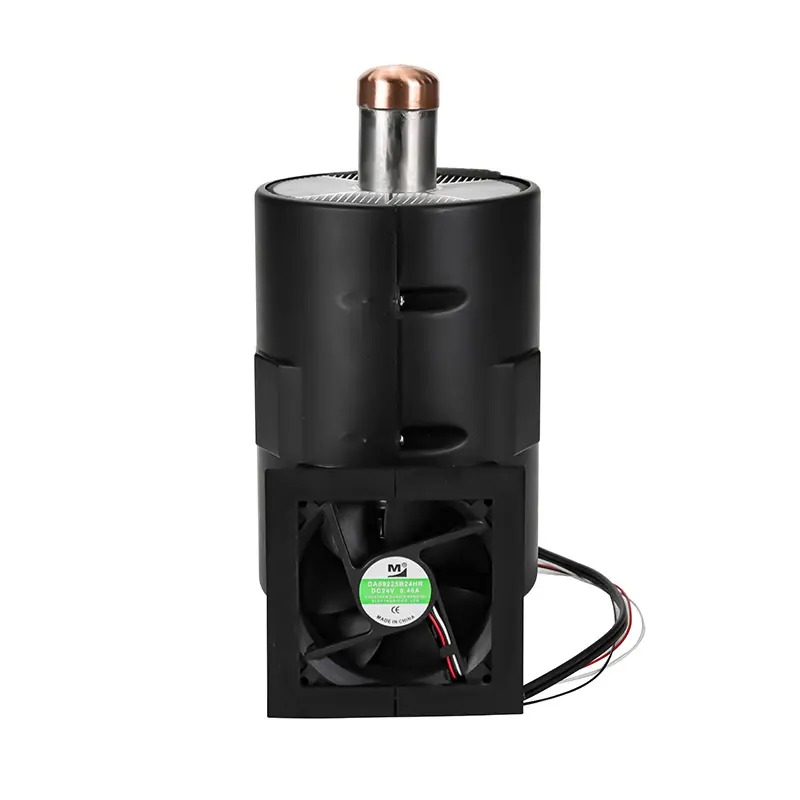
Understanding the components of an FPSC is essential to appreciating its functionality and efficiency. The major parts include the piston, displacer (if present), regenerator, heat exchangers, and the working gas (typically helium or hydrogen).
Piston: The piston is the core component that moves within the cylinder. It is driven by the pressure differential between the hot and cold ends. The free movement of the piston enables efficient thermodynamic cycles.
Displacer: In some FPSC designs, a displacer is used to shuttle the working gas between the hot and cold ends of the engine. The displacer helps to maintain the temperature gradient across the system, allowing for efficient heat transfer.
The regenerator is a key feature in Stirling coolers. It acts as a thermal buffer, temporarily storing heat from the gas during the expansion phase and returning it during compression. This mechanism improves the overall efficiency of the system by reducing energy losses.
Heat exchangers play a crucial role in both the hot and cold sections of the FPSC. They facilitate the transfer of heat from the object being cooled to the working gas and from the gas to the surrounding environment. These components are designed to maximize thermal conductivity, ensuring efficient heat transfer.
Helium or hydrogen is typically used as the working gas in a Free Piston Stirling Cooler. These gases have low viscosity and high thermal conductivity, allowing for efficient heat transfer across the system.
The Free Piston Stirling Cooler offers several advantages over traditional cooling systems, particularly in precision applications where reliability and efficiency are paramount.
FPSC systems are known for their high efficiency compared to conventional refrigeration methods. The absence of mechanical linkages and moving parts reduces friction and wear, which improves overall reliability and reduces maintenance. Moreover, because FPSCs can operate at a wide range of temperatures, they are adaptable to various applications, from cryogenic cooling to standard temperature regulation.
The lack of mechanical components such as compressors or valves allows the FPSC to be significantly more compact than other cooling systems. This feature is particularly valuable in applications where space is at a premium, such as in aerospace and portable medical devices.
Because FPSCs eliminate the need for complex mechanical components, they operate with minimal vibration and noise, making them ideal for sensitive environments like laboratories, spacecraft, or medical devices where noise reduction is crucial.
The simplicity of the design, combined with the fact that the system has fewer moving parts, results in a significantly longer lifespan. FPSCs can be highly reliable over extended periods, which is essential for applications such as space exploration, where maintenance or replacement is often not an option.
Free Piston Stirling Coolers are utilized in a variety of industries where high-performance cooling is necessary. Below are some of the key fields where FPSCs provide critical benefits.
In space missions, the need for efficient and reliable cooling systems is crucial. FPSCs are widely used to cool sensitive equipment on spacecraft and satellites. The ability of the Free Piston Stirling Cooler to function in zero-gravity environments, with minimal maintenance and a long lifespan, makes it an ideal choice for space applications.
FPSC technology is also used in medical applications, particularly in cryocoolers for MRI machines and other high-precision medical equipment. The ability to provide steady, low temperatures without producing noise or vibrations is invaluable for ensuring the accuracy and longevity of medical devices.
In industries that rely on heat-sensitive electronic components, FPSCs offer precise cooling without the bulk and complexity of traditional cooling systems. Whether used in semiconductor manufacturing or high-performance computing, FPSCs provide the temperature stability required for critical processes.
While Free Piston Stirling Coolers offer numerous benefits, they are not without their challenges.
The advanced technology and precision required to manufacture FPSCs can result in a higher initial cost compared to conventional cooling systems. This can be a barrier to adoption in some industries, particularly for applications with limited budgets.
Although FPSCs have fewer moving parts, their design and operation can be more complex than traditional systems, requiring specialized knowledge for both manufacturing and maintenance. This complexity can sometimes limit their widespread adoption.
While FPSCs are efficient at transferring heat, there are still limitations in their ability to scale for extremely high-capacity cooling systems. The thermal conductivity of the working gas and the heat exchanger design can limit performance in some high-demand scenarios.
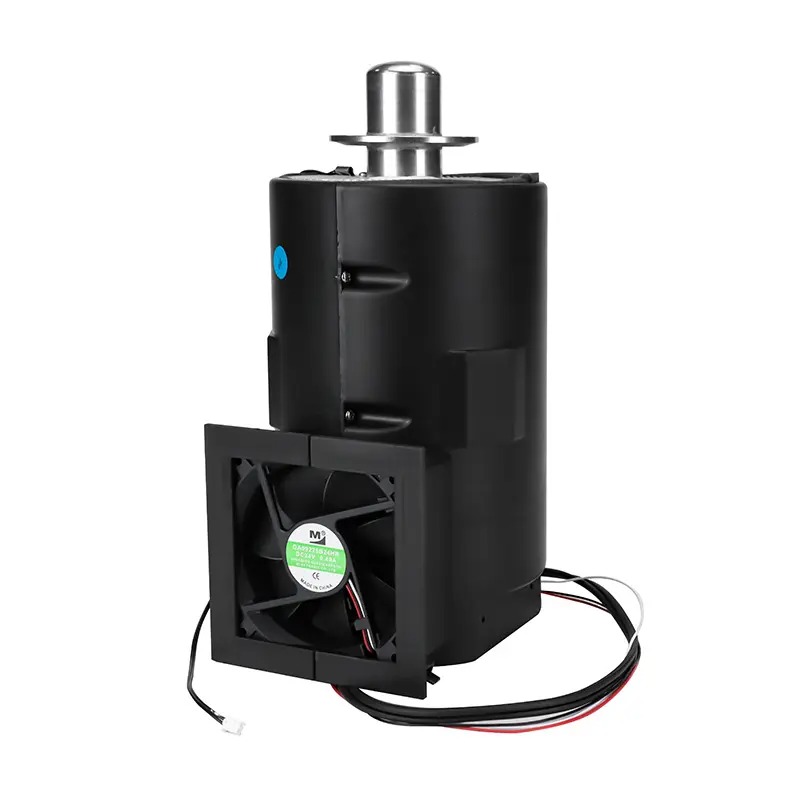
The future of Free Piston Stirling Coolers looks promising, with ongoing research and development focused on improving their efficiency, reducing costs, and expanding their range of applications.
New materials that enhance the thermal conductivity of heat exchangers are expected to improve the overall performance of FPSCs. By using more efficient materials, FPSCs can operate at lower temperatures and with greater cooling capacity.
As the demand for energy-efficient solutions grows, FPSCs may be integrated into renewable energy systems, such as solar power generation or geothermal cooling. This could help reduce the environmental impact of cooling systems while providing cost-effective solutions.
Free Piston Stirling Coolers are revolutionizing the way we approach cooling in various high-performance and precision environments. With their unique design, high efficiency, and reliability, FPSCs offer distinct advantages in aerospace, medical, and industrial applications. Despite their challenges, the ongoing development of this technology promises to overcome current limitations, making them even more accessible and versatile in the future.
1、What is the primary advantage of a Free Piston Stirling Cooler over traditional cooling methods?
The primary advantage of FPSCs is their high efficiency, minimal moving parts, and compact design. They offer a reliable and long-lasting solution for precision cooling applications with low noise and vibration.
2、What industries benefit the most from Free Piston Stirling Coolers?
FPSC technology is particularly beneficial in aerospace, medical devices, electronics, and industries that require precise temperature regulation and compact cooling systems.
3、Are Free Piston Stirling Coolers expensive?
Yes, the initial cost of FPSCs can be higher than traditional cooling systems due to their advanced technology and design. However, their long lifespan and efficiency may offset the higher initial investment over time.
4、Can Free Piston Stirling Coolers be used in space?
Yes, FPSCs are widely used in space exploration and satellite applications due to their ability to function in zero-gravity environments and provide reliable cooling with minimal maintenance.
5、What is the future outlook for Free Piston Stirling Coolers?
The future of FPSCs looks promising, with innovations in materials, energy integration, and performance efficiency expected to expand their applications and reduce costs, making them more accessible for a wide range of industries.


