
Views: 0 Author: Site Editor Publish Time: 2026-04-13 Origin: Site


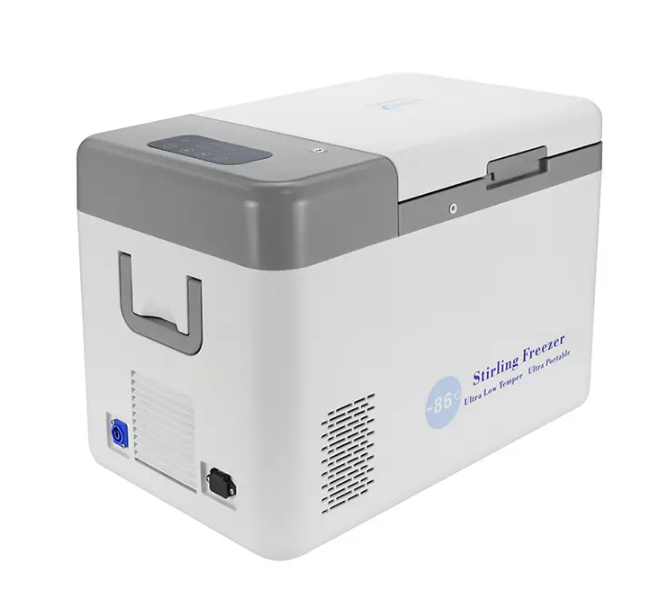
Ultra-low temperature (ULT) freezers are critical infrastructure. They protect irreplaceable biological assets around the clock. However, they also rank among the highest energy consumers in any research laboratory.
Recently, a major technology shift has disrupted the market. The stirling freezer replaces traditional dual-stage cascade compressors. It uses a free-piston engine instead. Manufacturers promise massive energy reductions and lower physical maintenance.
You must approach these claims through a skeptical lens. Paper specifications often highlight empty-cabinet efficiency. A bottom-of-funnel purchasing decision requires deeper analysis. You need to look past basic marketing data. Evaluating this technology demands analyzing dynamic thermal recovery, firmware reliability, and facility alignment.
This guide outlines the exact questions you must ask. Laboratory managers, principal investigators (PIs), and procurement teams can use this framework. We will help you ensure your next cold storage investment matches your real-world workflow.
Workflow matching is non-negotiable: Stirling freezers excel in low-access archival storage but may struggle with rapid temperature recovery in high-traffic, frequent-door-opening environments.
Beware the firmware blind spot: The mechanical Stirling engine is robust, but digital controller/PCB failures pose catastrophic risks, making independent monitoring systems a mandatory secondary investment.
Evaluate beyond energy labels: Meaningful comparison requires checking actual workflow demands, warranty limits, and the hidden impact of dynamic loads.
You must contrast the continuous modulation of a free-piston engine with traditional cascade systems. Cascade systems use brute force. They deploy rapid pull-down power when you open the door. Conversely, a free-piston engine continuously modulates its cooling effort. It revs up and down gently.
Marketing materials often measure efficiency in a completely unopened state. Real-world workflows look very different. Many researchers open doors frequently for 15-second intervals. In these dynamic scenarios, temperature recovery can lag significantly. This lag extends the time your samples spend in high-risk "warm" zones. It also causes temporary energy usage spikes.
We recommend a strict shortlisting logic based on your daily usage patterns:
Long-term Archival Storage: Designate free-piston units for biobanking. They excel when doors remain closed for days.
Multi-user Workstations: Reconsider these units for high-traffic labs. Constant daily access requires rapid temperature recovery.
Clinical Vaccine Storage: Evaluate carefully. Frequent batch loading may overwhelm the continuous modulation cycle.
Common Mistake: Buying an ultra-low freezer based solely on its daily kilowatt-hour rating while ignoring how many times your team opens it daily.
Operating performance heavily depends on your actual load. A traditional ULT unit uses up to 16-30 kWh per day. Modern free-piston units often claim sub-10 kWh per day. These numbers look incredible on paper.
However, you must evaluate energy performance based on your specific use case. Factor in ambient heat generation and internal box capacity. A fully loaded cabinet behaves differently than an empty one. When you add warm samples, the engine must work harder. This dynamic load changes your daily energy profile.
Energy Comparison Chart
Freezer Technology Type | Average Energy Use (kWh/day) | Typical Long-Term Energy Demand | Best Use Case |
|---|---|---|---|
Aging Cascade (10+ years old) | 20 - 30 kWh | Highest | Immediate Replacement |
Modern Dual-Compressor | 10 - 14 kWh | Moderate | High-traffic Labs |
Stirling Engine Model | 6 - 9 kWh | Lowest | Archival Biobanking |
Many institutions now support the Green Labs standard. This involves transitioning setpoints from -80°C to -70°C. Making this change can reduce energy consumption by an additional 22 to 30 percent. It also drastically reduces mechanical wear on the cooling engine.
You must assess if your sample viability protocols allow for this adjustment. Most nucleic acids and proteins remain perfectly stable at -70°C. If your protocols allow it, a stirling freezer running at -70°C can maximize operational efficiency and extend working life.
You must carefully evaluate space constraints versus heat dissipation. Modern units often use Vacuum Insulated Panels (VIP). They also feature top-mounted engines. This design offers excellent storage-to-footprint ratios. Some manufacturers even advertise zero wall clearance requirements.
Implementing these units requires strict adherence to infrastructure limits. Placing a unit in a poorly ventilated room invites failure.
HVAC Limits: Ambient temperatures exceeding 32°C (90°F) strain the system. They negate expected energy savings.
Top Clearance: Do not stack cardboard boxes on top of the unit. This blocks critical exhaust fans.
Power Quality: Verify your electrical grid stability. Voltage drops can interrupt continuous engine modulation.
Best Practice: Conduct a facility audit before ordering. Ensure your room's HVAC system can handle the specific BTU heat output of the new equipment. Stacking items on top creates a dangerous thermal trap. The engine will overwork, shortening its lifespan.
Many buyers ignore the firmware trap. The physical free-piston engine rarely fails. It has very few moving parts. However, the digital side tells a different story. Documented precedents exist regarding solid-state relay and PCB "freezes."
In these catastrophic events, the external display malfunctions. It falsely registers -80°C while the compressor is actually dead. The internal temperature slowly rises. Because the firmware has frozen, onboard alarms never trigger. Researchers discover the failure only after samples have melted.
You cannot rely solely on the factory alarm system. Security and compliance require immediate secondary measures. A new purchase must include an independent monitoring system.
Deploy a battery-backed, third-party temperature probe. Drill it through the access port. Connect it to a cloud-based remote alert system. It must send SMS and email alerts directly to your phone. This minimal secondary investment prevents million-dollar sample losses.
You must scrutinize the fine print of your warranty contract. Manufacturers aggressively market seven-year warranties on the cooling engine itself. They know the mechanical core is highly reliable.
However, they frequently limit coverage on internal electronics and controllers. These digital parts often carry merely a two-year warranty. You must identify exactly what the manufacturer will pay for during a breakdown.
Ensure absolute clarity on labor costs. Does the warranty cover the actual labor required to replace a faulty part? Or does it merely ship you the component? Labor costs for specialized refrigeration technicians run very high. A "parts-only" warranty leaves your operating budget heavily exposed.
You should constantly compare free-piston technology against modern dual-cascade systems. Often called "TwinCool" systems, these units feature two independent traditional compressors.
Your decision framework relies on defining your primary operational goals. If absolute lowest power draw is your goal, free-piston models usually win. If minimal mechanical maintenance is critical, they also hold an advantage.
However, dual-cascade systems offer something else: 100 percent mechanical redundancy. If one compressor fails completely, the second one takes over. It can hold the cabinet at -80°C indefinitely. Furthermore, cascade systems handle rapid door-recovery significantly better. If user access is constant, cascade is generally superior.
Purchasing an ultra-low temperature freezer represents a highly strategic infrastructure decision. It is never just a simple appliance upgrade. Free-piston technology offers unmatched energy efficiency and exceptional spatial economy. However, you must deploy it in the correct operational context.
Before you request a final quote from any manufacturer, take three specific actions. First, audit your lab's weekly door-opening logs. Identify your true usage volume. Second, confirm your facility HVAC limits can handle the exhaust load. Finally, verify your budget accommodates third-party monitoring probes. This final step protects you against dangerous electronic blind spots.
A: Cascade systems use two traditional compressors working in sequence with refrigerants. They pull down temperatures very quickly using brute force. A free-piston freezer uses a different mechanical engine entirely. It relies on continuous modulation, eliminating traditional compressors. This approach saves significant daily energy.
A: No. Ultra-low temperature freezers are designed to maintain temperature. They are not designed to blast-freeze large batches of warm samples. Doing so strains the continuous modulation engine heavily. It also jeopardizes your existing frozen inventory by raising the internal cabinet temperature.
A: Replacing an aging traditional model can yield up to a 70 percent reduction in daily energy use. Old units often consume 30 kWh per day. Modern free-piston units often operate under 10 kWh per day. However, your real-world savings depend heavily on ambient room temperature and daily door opening frequency.


