
Views: 0 Author: Site Editor Publish Time: 2026-04-28 Origin: Site


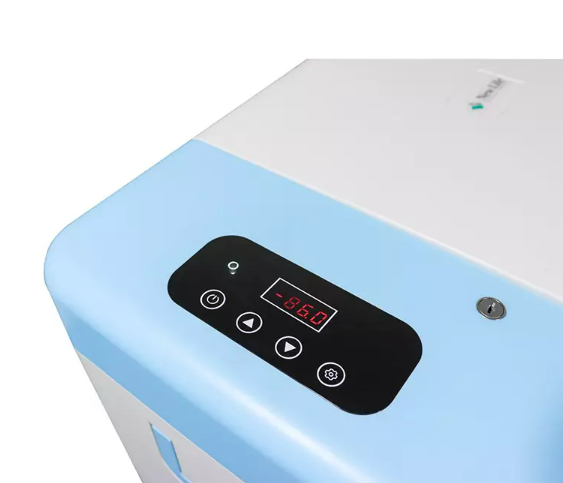
Upgrading or expanding biobank storage requires careful operational planning. You might currently evaluate a stirling freezer against traditional dual-compressor models. Protecting high-value biological samples demands reliable performance day and night. However, sourcing an ultra-low temperature unit purely on physical footprint ignores vital factors. Evaluating models based only on static temperature capabilities misleads facility managers. Lab operators often overlook thermal recovery times. They underestimate facility HVAC burdens and long-term maintenance complexities.
Failing to account for these operational realities jeopardizes sample integrity. It also strains long-term operating resources unnecessarily. We provide an evidence-based, skeptical-friendly framework to guide your purchasing decision. You will learn to evaluate if this specific engine technology aligns perfectly. We help match the right hardware directly to your daily workflow, budget limitations, and risk profile.
Technology matching: Stirling technology excels in stable, low-touch environments offering major energy savings, but traditional cascade systems may be necessary for high-frequency access.
Dynamic over static metrics: True performance is measured by door opening recovery times and cabinet temperature uniformity, not just baseline energy draw.
Hidden operating drivers: Long-term comparison should account for ambient heat rejection, required floor space per sample, and maintenance complexity.
Compliance and sustainability: Transitioning to -70°C storage protocols and hydrocarbon refrigerants (R-170) dramatically reduces environmental impact without compromising sample viability.
Selecting the right ultra-low temperature storage starts with understanding the underlying engine architecture. Manufacturers primarily rely on two distinct refrigeration technologies today. Each approach carries unique mechanical behaviors.
Most traditional ultra-low temperature units utilize a dual-stage cascade system. This setup connects two separate refrigeration loops. The first stage cools the condenser of the second stage. It essentially steps down the temperature in two brutal, high-pressure phases.
Pros: This represents a highly mature technology. You can easily find replacement parts on the market. They deliver exceptionally rapid pull-down times.
Cons: They suffer from high mechanical friction. These compressors require complex oil lubrication systems. They generate significant ambient heat output. They also demand larger mechanical bays.
A continuous-cooling, closed-loop thermodynamic cycle drives a free-piston engine. It completely eliminates traditional compressors. Instead, a piston moves continuously suspended on gas bearings. It operates without any oil lubrication. The engine uses helium to transfer heat efficiently. Operating a stirling ultra low freezer fundamentally changes how labs consume electricity.
Pros: You get a drastic reduction in mechanical wear. It offers substantially lower static energy consumption. A smaller engine compartment yields high volumetric storage density.
Cons: It is less suited for rapid temperature fluctuations. This remains a relatively newer technology. Buyers face a narrower secondary or used market.
Mapping these architectures to specific lab types prevents costly procurement mistakes. The table below outlines how to align technology with daily application.
Laboratory Type | Recommended Technology | Primary Justification |
|---|---|---|
Long-Term Biorepository | Free-Piston Stirling | Maximum energy savings. Rare door openings minimize recovery concerns. High sample density per square foot. |
Clinical Daily-Use Bench | Dual-Stage Cascade | Frequent door openings demand aggressive, rapid thermal recovery. Better suited for high traffic. |
Academic Research Lab | Hybrid / Variable Capacity | Balances energy efficiency goals. Manages moderate daily access. |
Evaluating an ultra-low temperature unit solely by its energy label misleads buyers. Real-world laboratory workflows rarely mirror controlled factory testing environments. You must map your daily staff habits directly to the hardware.
Manufacturers often advertise incredibly low daily energy usage. This static energy efficiency metric looks brilliant on paper. It measures consumption when doors remain locked shut. However, this efficiency degrades rapidly in high-throughput environments. Opening a door immediately floods the chamber with ambient warm air. Engines must ramp up to purge this heat. If your staff constantly accesses shelves, static efficiency numbers become irrelevant.
Different architectures handle ambient air intrusion differently. Compare what happens during a standard 15-second access event versus a 60-second inventory search. Cascade systems use brute force to cool the chamber quickly. Stirling systems modulate their cooling capacity more gradually.
When evaluating data, watch closely for the -75°C threshold. If internal temperatures break this line during recovery, risks multiply. Peripheral samples stored near the front face molecular-level "micro-thawing". Repeated micro-thawing degrades protein and RNA integrity over several years.
Buyers often trust the single-point temperature displayed on the front screen. This number represents just one sensor location. Actual temperatures vary wildly across different internal zones. Top corners and bottom racks frequently become "dead zones". Some systems show -80°C on the screen while top shelf samples sit at -72°C. You must request mapping data showing variance across all interior zones.
Categorize your actual daily storage needs before contacting vendors. Audit your laboratory's access patterns for a week. Count every single door opening. If staff access the unit more than 10 times daily, your strategy must pivot. Traditional high-performance compressors might out-recover highly efficient units. Redundant dual-cooling systems also manage heavy traffic better. They protect peripheral samples during constant workflow disruptions.
Focusing purely on the upfront invoice price guarantees poor planning. Ultra-low temperature equipment demands a comprehensive lifecycle analysis. These machines draw power constantly for over a decade.
An average unit operates reliably for 10 to 12 years. The initial capital expenditure represents only a fraction of long-term impact. Electricity consumption acts as a silent operational burden. Over ten years, operating demands frequently exceed the original purchase price in importance. You must evaluate the entire decade-long performance footprint.
Older units reject massive amounts of heat directly into the laboratory. Compressors act like space heaters running 24 hours a day. This requires specialized, heavy-duty facility air conditioning. You pay twice in operational terms. First, you pay to freeze the samples. Second, you pay to remove the expelled heat. A modern free-piston system reduces heat output drastically. This directly lowers your facility HVAC burden year over year.
Baseline energy consumption has dropped significantly over the past decade. Legacy systems routinely consume 16 to 30 kWh per day. Modern systems drop this footprint to just 5 to 9 kWh per day. You must factor in your local utility rates to evaluate long-term suitability. ENERGY STAR® certified units guarantee adherence to these modern benchmarks.
System Type | Daily Usage (kWh) | Annual Energy Cost ($0.12/kWh) | 10-Year Direct Energy Cost |
|---|---|---|---|
Legacy Cascade (Pre-2015) | 24 kWh | $1,051 | $10,510 |
Modern Dual-Compressor | 12 kWh | $525 | $5,250 |
Free-Piston Stirling | 6 kWh | $262 | $2,620 |
Complex dual-compressors require rigorous maintenance schedules. Technicians must manage oil logging issues. Staff must frequently clear dust filters to prevent catastrophic compressor failure. Free-piston models eliminate oil entirely. They possess vastly fewer moving parts. However, while they break down less frequently, repairs are complex. Complete engine replacements require highly specific vendor support. You must ensure specialized technicians operate in your geographic region.
Laboratory floor space carries a premium value. In dense biotech hubs, leasing square footage drives overhead costs aggressively. Every square inch occupied by equipment must justify its footprint.
Form factor drastically influences both ergonomics and spatial efficiency. You must balance usability against physics.
Chest Configurations: Cold air sinks naturally. Chest models retain cold air excellently upon opening. They suffer minimal temperature spikes during access. However, they demand massive floor footprints. Inventory management becomes notoriously difficult. Technicians struggle to retrieve items from the bottom.
Upright Configurations: They provide high space utilization. They stand vertically, saving precious floor space. Rack compatibility allows for highly organized inventory tracking. They do lose cold air faster when opened.
Modern engineering maximizes internal volume without increasing external dimensions. Vacuum Insulated Panels (VIP) replace bulky traditional foam. VIP walls are exceptionally thin but offer superior thermal resistance. Furthermore, removing bulky dual compressors frees up internal cabinet space. A smaller engine bay allows for up to 50% more internal storage capacity. You can store significantly more vials within the exact same laboratory square footage.
Never measure just the physical box when plotting floorplans. You must factor in necessary ventilation clearance. Traditional units require 5 to 6 inches of rear and side clearance. Obstructing this airflow destroys compressor lifespans quickly. You must also maintain strict distance from ambient heat sources. Keep units away from exterior doors, sunny windows, or active autoclaves.
Biorepositories house decades of irreplaceable research. Hardware failures represent an existential threat to institutional knowledge. Your procurement strategy must heavily prioritize disaster resilience.
Total mechanical failures happen unexpectedly. Evaluating a unit's backup compatibility is completely non-negotiable. Connecting liquid nitrogen (LN2) or carbon dioxide (CO2) backup systems provides crucial safety nets. These systems automatically inject cooling agents if chamber temperatures rise dangerously. They buy facility managers precious hours to relocate high-value biological specimens.
Compliance-heavy clinical environments demand rigorous audit trails. Modern smart features replace manual clipboard logs. Evaluate units offering NFC or facial recognition door access. These restrict entry to authorized personnel only. Cloud-based temperature logging records data continuously. It ensures automated compliance with strict regulatory standards.
Facility power failures test insulation quality instantly. How long can a unit hold sub -60°C temperatures during a total blackout? This metric is called the warm-up buffer. It relies heavily on insulation density. Look for advanced R-50 insulation ratings. High-density VIP walls dramatically slow thermal degradation. They provide critical response windows before samples begin to thaw.
Green lab initiatives increasingly drive institutional purchasing guidelines. Traditional refrigerants like HFCs possess a massive Global Warming Potential (GWP). They trap thousands of times more heat than carbon dioxide. Adopting ultra-low GWP hydrocarbon refrigerants changes this entirely. R-170 (ethane) provides exceptional cooling efficiency. It heavily reduces environmental impact and aligns with strict global regulatory phase-outs.
Procuring ultra-low temperature storage requires balancing energy efficiency against daily operational demands. A free-piston system represents a highly effective, sustainable choice for long-term, stable sample archiving. It lowers HVAC burden, maximizes storage per square foot, and limits mechanical wear. However, high-traffic clinical labs must carefully weigh these energy advantages against thermal recovery speeds. Frequent door access may still demand the aggressive cooling power of legacy cascade models. Aligning the underlying technology with your specific daily workflow prevents costly sample degradation.
Audit your lab's daily door-opening frequency strictly for one week.
Calculate your facility's localized cost of electricity and HVAC cooling capabilities.
Request real-world recovery mapping data from vendors, ignoring static baseline benchmarks.
Review internal SOPs to determine if shifting storage temperatures from -80°C to -70°C is viable for a 30% immediate energy reduction.
A: The industry standard lifespan typically ranges from 10 to 12 years. Triggers for replacing old equipment include prolonged temperature recovery times after opening. When repair costs approach half the price of a new unit, replacement becomes operationally necessary.
A: No. Ultra-low temperature units are engineered specifically to maintain existing temperatures, not act as blast freezers. Introducing heavy warm loads strains the engine excessively. This massive heat introduction also actively jeopardizes adjacent frozen samples by causing micro-thawing.
A: Yes. There is a growing scientific consensus that -70°C safely preserves most biological samples long-term. Elevating the setpoint reduces mechanical wear on the engine. It also saves approximately 30% in daily energy consumption.
A: The closed-loop free-piston system eliminates routine oil management and compressor checks. However, operators must still perform universal maintenance. You must routinely defrost the chamber, aggressively clean door gaskets, and ensure unobstructed airflow around the exterior.


